

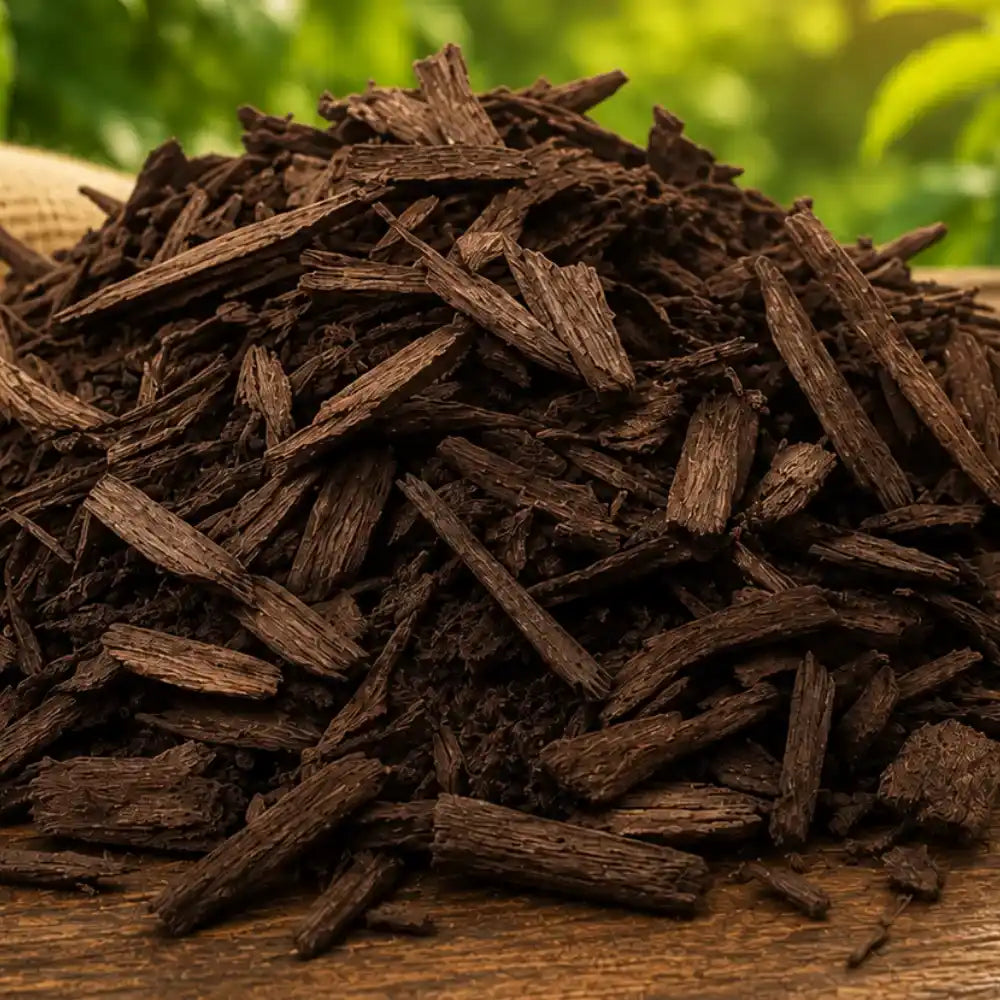
Why Natural Wood Chips Are Better Than Mulch
| NATURAL WOOD CHIPS (OURS) | TYPICAL MULCH | |
|---|---|---|
| Made of | Whole tree: wood, bark, and leaf | Often ground pallets, scrap wood, mixed landscape waste |
| Additives | None, no dye or coloring | Frequently dyed for uniform color |
| Chemical risk | Clean trees only | Treatment chemicals from pallets, herbicide residue from waste |
| In the soil | Breaks down into living soil, feeds fungi | Mostly decorative, slower soil value |
| Material diversity | Wood, bark, and leaf feed a fuller soil food web | Uniform ground wood, less biological value |
| Best role | Building soil for gardens and orchards | Decorative ground cover |
Clean chips build soil. Suspect Mulch leaches toxins. For anyone growing food, that is the whole difference.
Aged Wood Chips: How to Use
-

Clear grass and weeds in a circle around the tree, out to the dripline (the edge of the canopy).
-

Spread chips 3 to 4 inches deep across the ring.
-

Leave a 3 to 6 inch gap of bare soil around the trunk. Do not pile chips against the bark.
-

Extend the ring out to or past the dripline, where the feeder roots are.
-

Water it in, then top up once or thrice a year as the layer thins.


Other Ways to Use
| Use | Depth |
|---|---|
| Top-dress veg rows & raised beds | 1 to 2 in |
| Sheet mulch / no-dig beds | 3 to 4 in |
| Refresh tired beds | 1 to 2 in |
| Pathways between beds | 3 to 4 in |
| Ornamentals & natives | 3 in |
| Slope & erosion control | 3 to 4 in |
| Compost carbon (browns) | as needed |
| Soil & potting blend | 10 to 20% |
Quick Tips
- Already aged, so surface chips will not rob nitrogen from your plants.
- Add a little nitrogen only if tilling chips into soil rather than top-dressing.
- Best for trees, shrubs, and perennials, though top-dressing annuals works fine too.
- Keep mulch off the crowns and stems of plants, same as tree trunks.
- Great in dry spells for holding moisture. Watch that stems do not stay constantly wet.
- Clean chipped tree, wood, bark, and leaf. No pallets, no dye, no treated lumber.